2026
Sunhouse
Your roof, battery, heat pump and car — finally on the same page.
Your home’s energy in one calm view: solar, battery, heat pump and EV charger, with a ‘best time to run it’ planner on dynamic tariffs.
A self-initiated concept, designed like a real product.
The brief we set ourselves
Design one calm view of a home's energy — solar, battery, heat pump and EV charger — and a planner that says when to run things on a dynamic tariff, without turning the house into a control room.
Who it is for
Homeowners aged 30–60 with some mix of solar panels, a home battery, a heat pump and an electric car, who pay a tariff that changes by the hour.
What we designed
Live energy flow over a 3D house, a day planner with price and solar forecast, heat-pump detail with an offline-sensor state, and a dark monthly savings report.
Design facts from the concept files — not business results.
02ResearchHome energy got smart. The apps got crowded.
We looked at how fast home energy management is growing, why the car is becoming part of the house, and what energy apps on the market lead with — one brand, one device, one tariff.
We looked at how fast home energy management is growing, why the car is becoming part of the house, and what energy apps on the market lead with — one brand, one device, one tariff.
- Market
Home energy management systems were estimated at $3.76B in 2024, growing to $14B by 2033 (CAGR 15.7%), driven by solar and heat-pump integration.
DecisionShow the home as one system, not a list of devices: one flow from the sun to the house, the battery and the grid.
- The car
Electric cars were about a quarter of new cars sold in 2025 — 28% in Europe (IEA). Home charging is now part of the household energy balance.
DecisionThe EV is a first-class device: plugged-in callout on the live view, «EV to 80%» scheduled in the cheapest hours.
- Tariffs
Supplier apps such as Octopus Energy's are built around the tariff; the devices in the house — and the question «when should I run this?» — are left to the user.
DecisionA day planner that combines price and solar forecast and makes one suggestion at a time: «Run at 13:00 — save £0.38».
Patterns we borrowed
- Octopus Energy
- Only the idea of an hourly tariff as the core of the app; no screens or brand elements audited or reused
- Energy dashboards
- A flow diagram from source to use with kW on every branch
- Weather apps
- An hourly timeline with the current hour highlighted and a tooltip
- Thermostats
- A round dial with target and current temperature and +/− buttons
What we left out
Names, logos, copy and screens of any supplier or device maker. Sunhouse has its own mark and 3D renders; a generated «flow pipes» asset was rejected because it read as a toy, and the flow was built from UI callouts instead.
Moodboard references
From four device lists to one home in daylight.
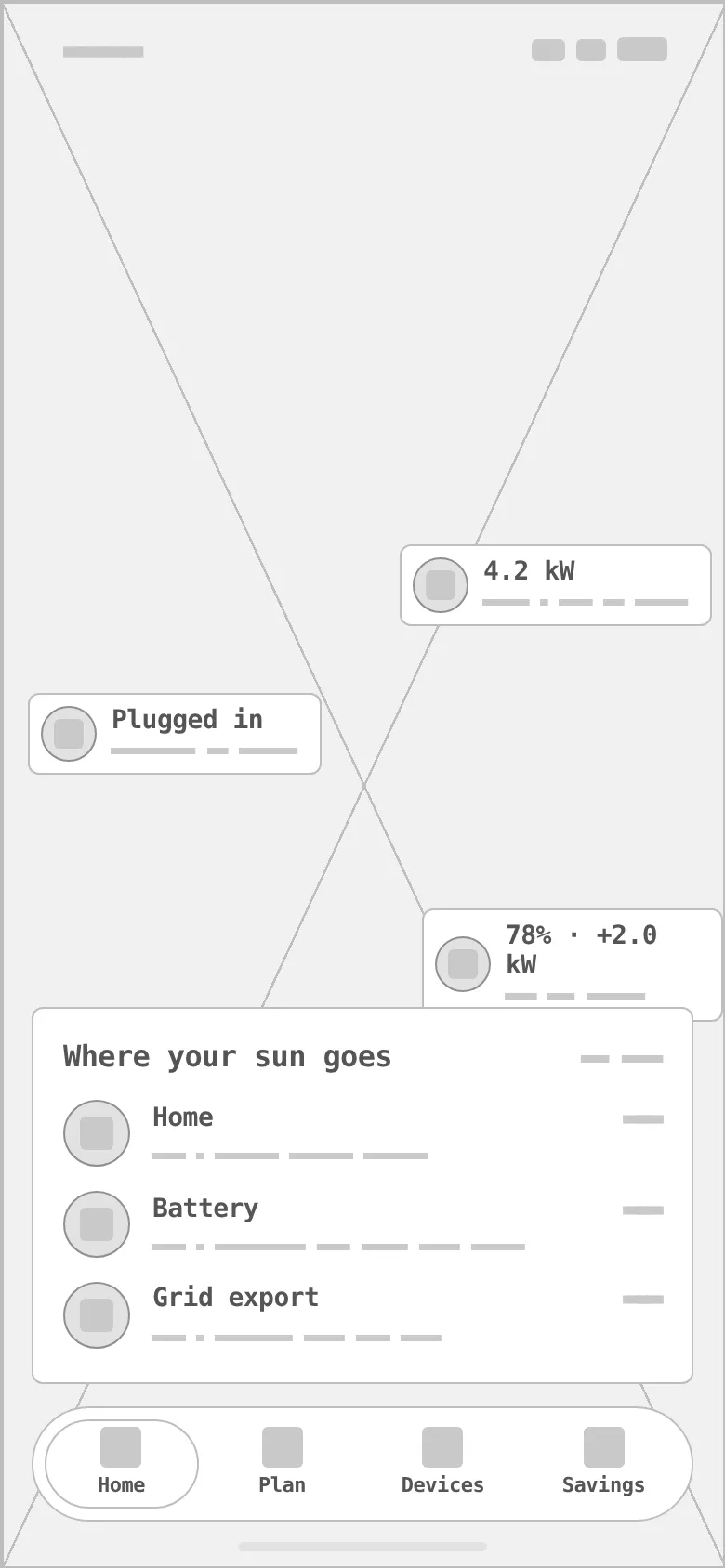
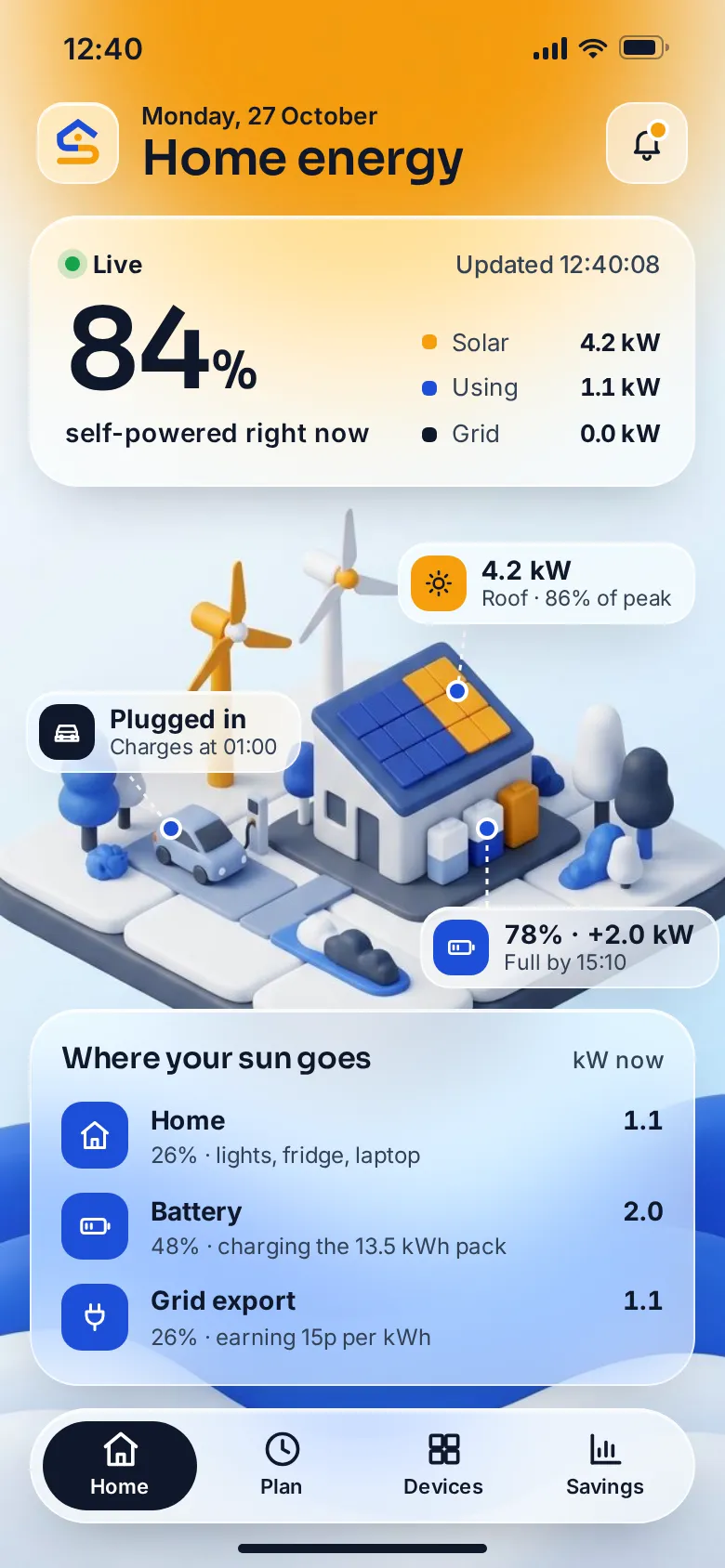
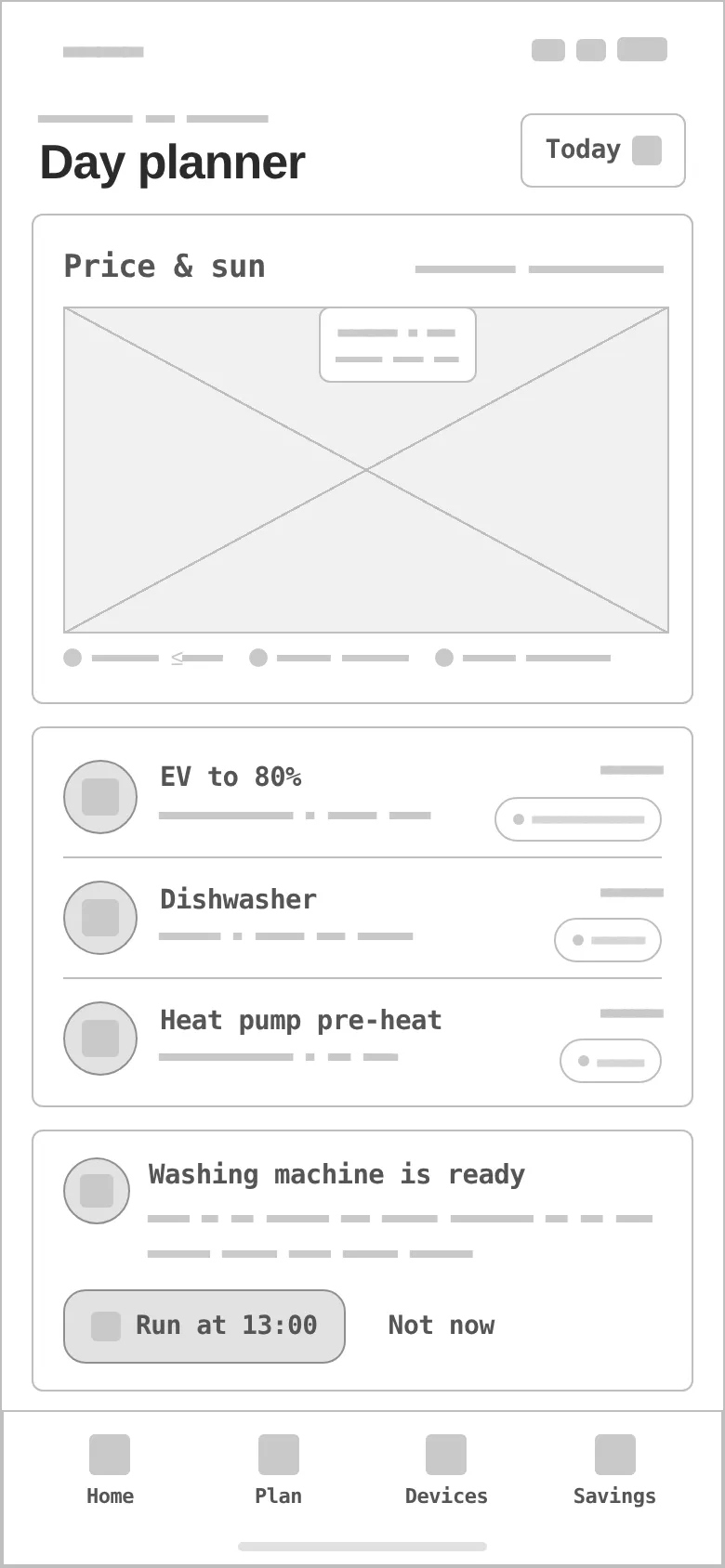
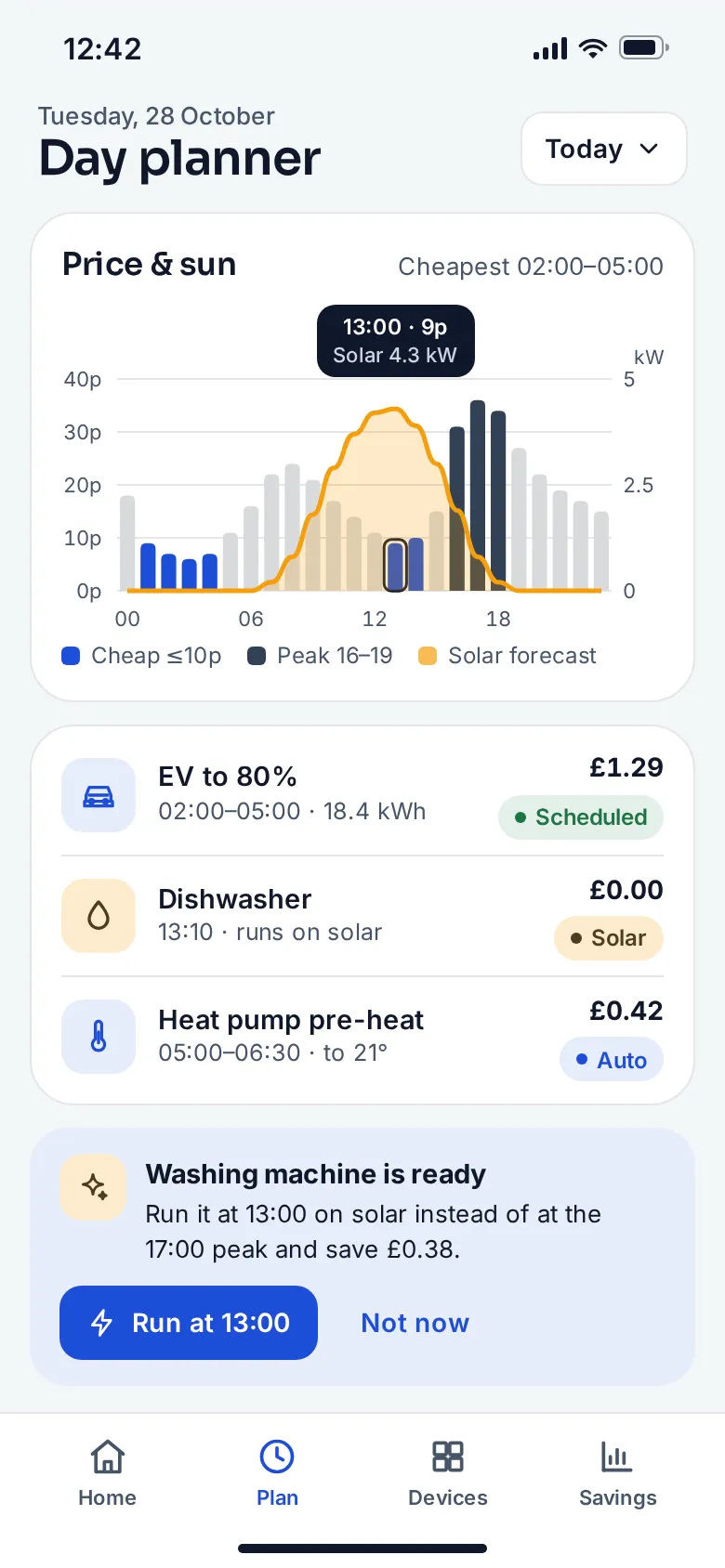
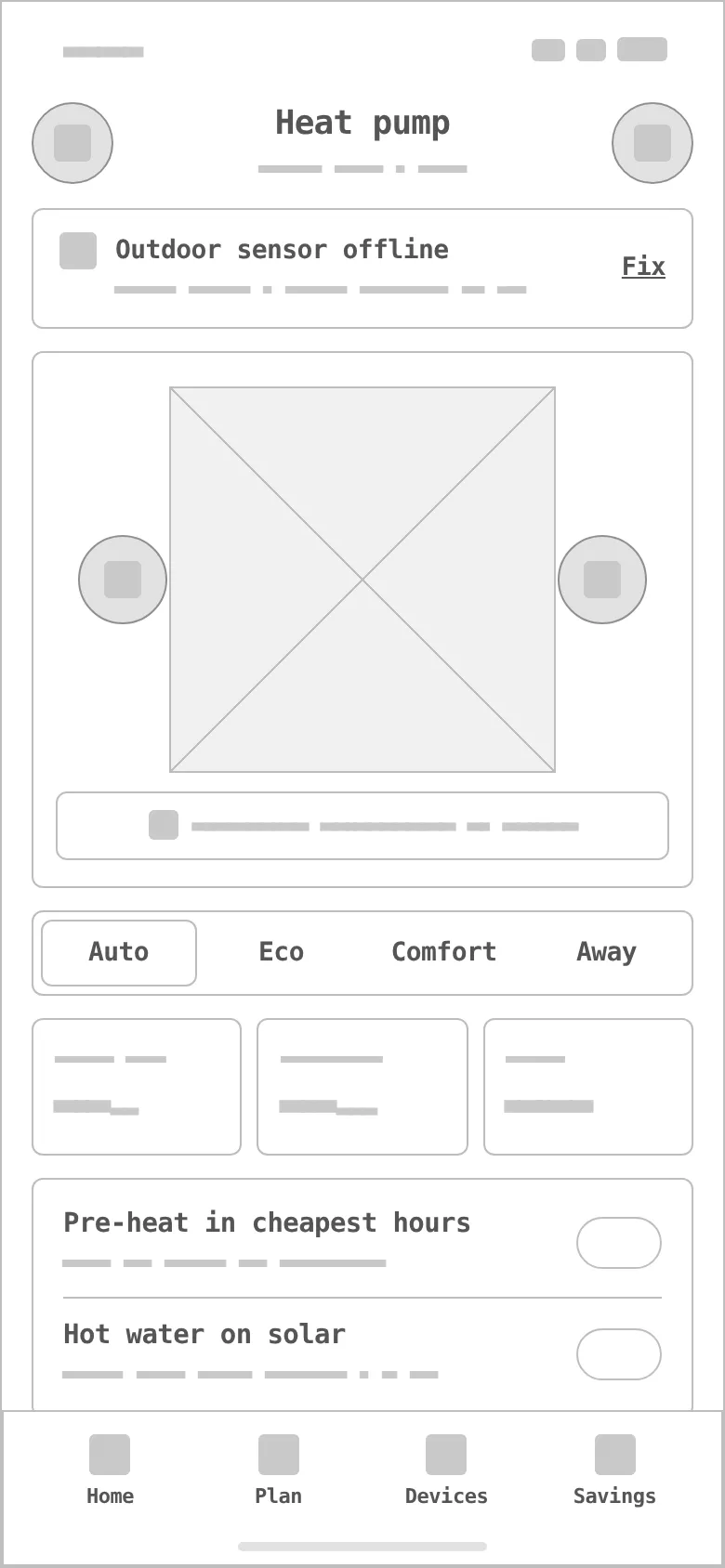
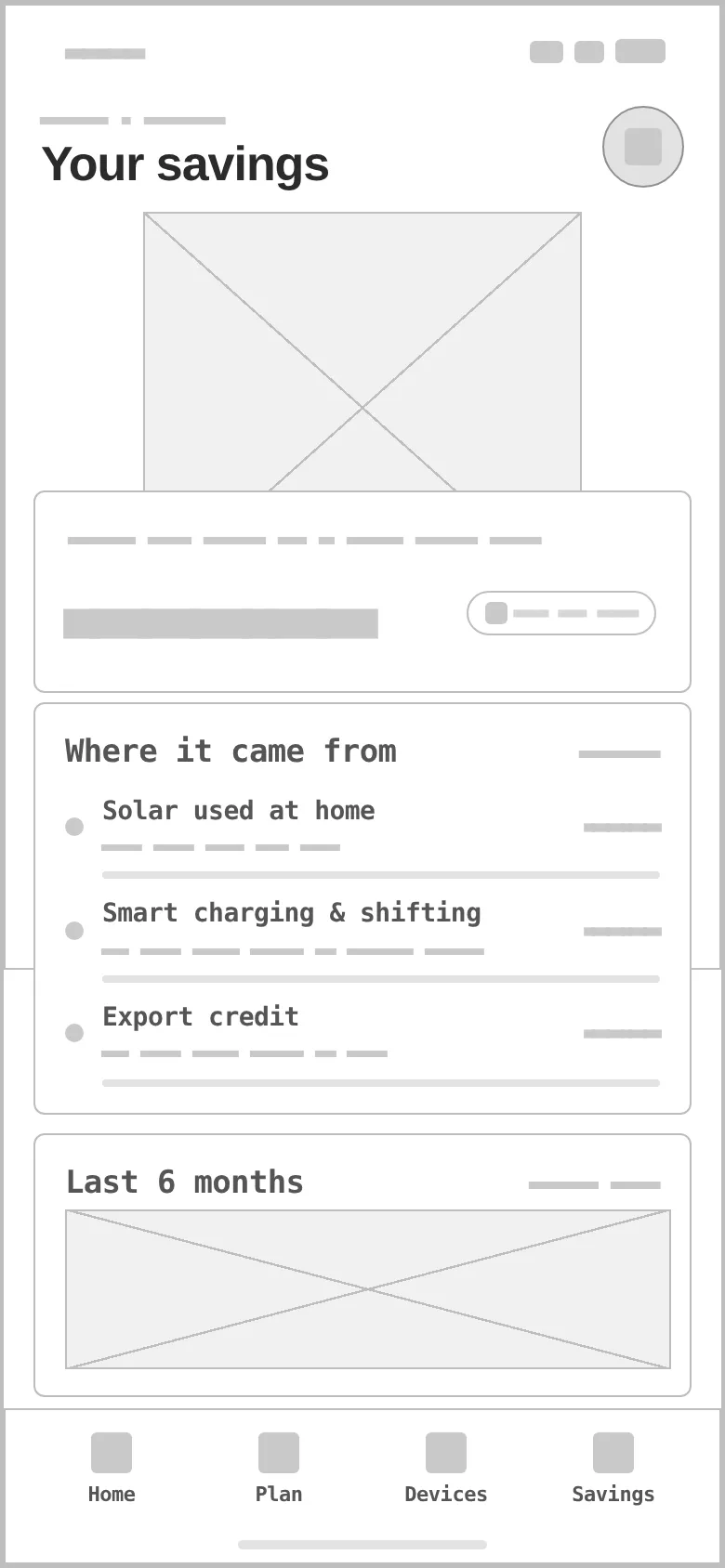
Every «before» is generated from the very same screen markup, reduced to outlines, readable labels and grey word-bars — no colour, 3D or glass. Drag a handle to compare.
- 01
Hierarchy
One number first — 84% self-powered right now — then where the sun goes, then the devices. The planner leads with the cheapest window.
- 02
Flow without pipes
The energy flow is told by callouts pinned to the 3D house (roof, battery, EV) and three rows of kW, instead of animated tubes.
- 03
States
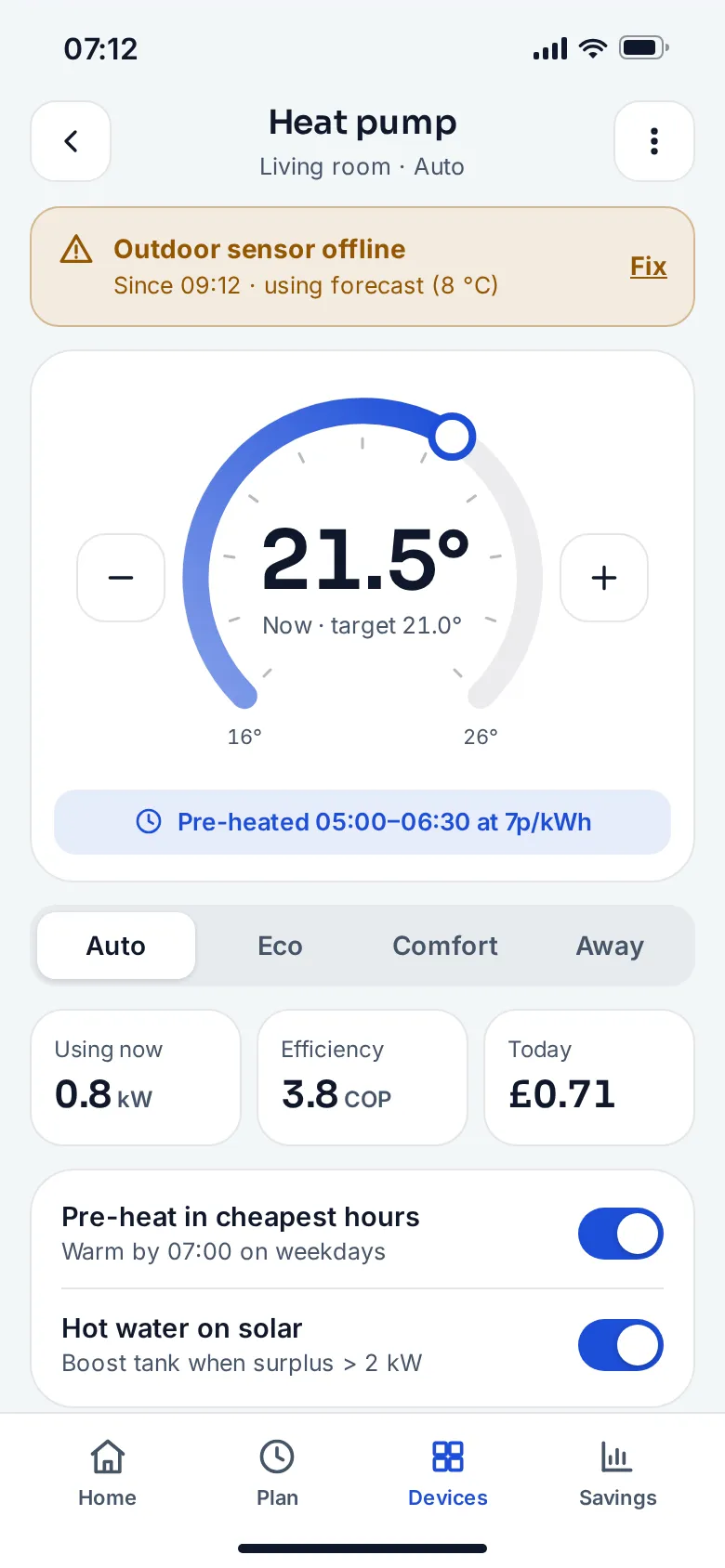
Live / updated time, a selected hour with tooltip, scheduled / solar / auto device chips, an offline outdoor sensor with Fix, toggles on and off.
- 04
Assets
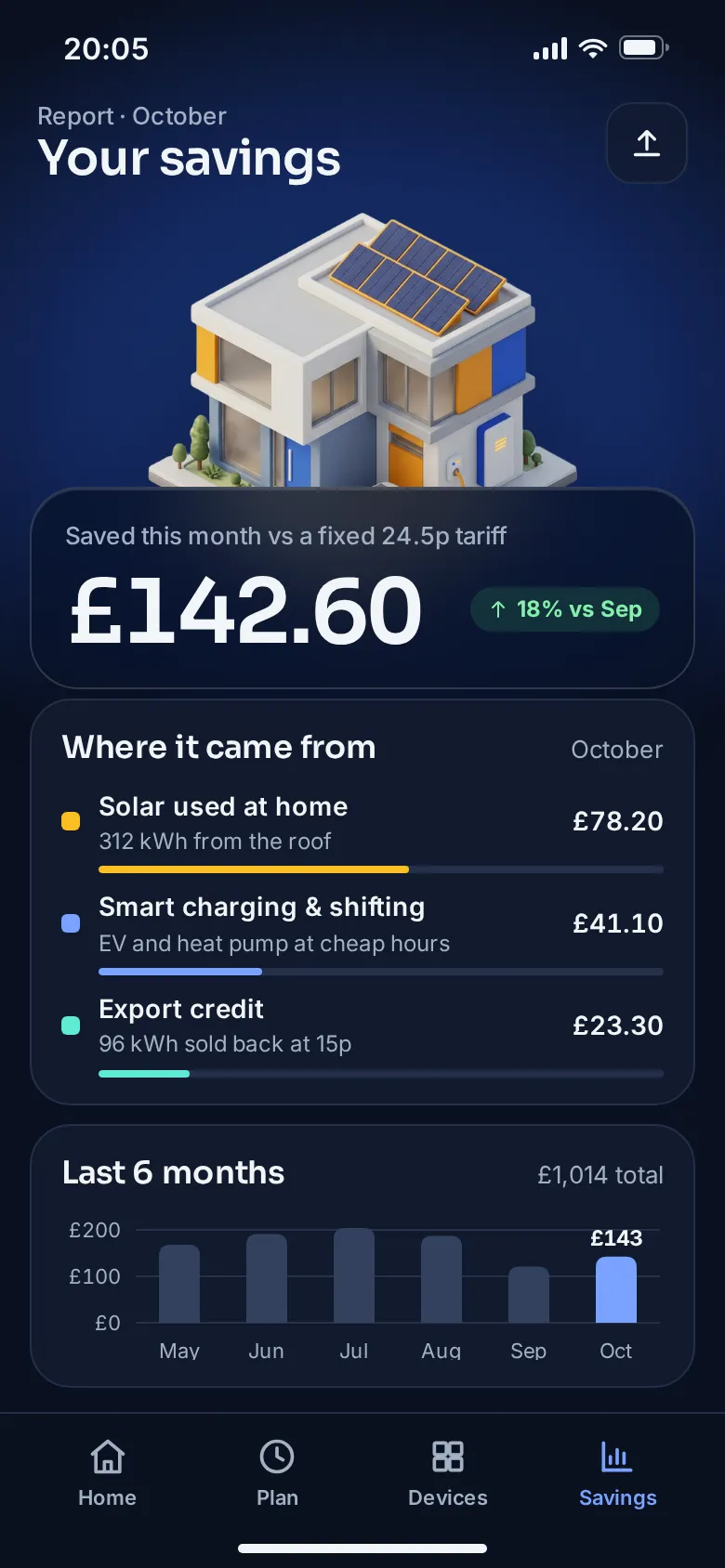
Two 3D renders made for the concept — the sky scene behind the glass and the isometric house on the night report. One generated asset was rejected.
- 05
Glass, measured
White 60% glass with 30 px blur in light, rgba night glass with 26 px blur on the report. Worst pixel under any text: 5.6:1 light, 6.3:1 dark.
- 06
Real-looking data
Hourly prices in pence, a 13.5 kWh battery, 3.8 COP heat pump and a £142.60 month split into solar, shifting and export — realistic numbers test the layout.
Grid blue for control, solar amber for the sun.
Grid blue carries every action (6.7:1 with white text); solar amber is the sun itself at 1.98:1 on sky — fills, chart series and the logo dot, never text. Sora gives headlines and big numbers a technical-but-friendly voice, Inter runs the interface.
A roof chevron that flows into an «S», with a sun dot — picked from four sketched directions because it is the simplest, not a generic house-with-wifi, and reads at 16–32 px.
#1D4ED8
vs bg 6.18:1 · label 6.7:1
#F59E0B
on bg 1.98:1
#0F172A
on bg 16.46:1
#F3F6F9
text on it 16.46:1
#FFFFFF
text on it 17.85:1
#475569
on bg 6.99:1
Accent / bg 1.98:1 — solar amber is for fills, chart series and brand moments with dark text, never for text or signal icons.
Sora 600Sunhouse
Sora 600Homeowners with solar/battery/heat pump/EV, 30–60
Inter 400 · 16/26Your home’s energy in one calm view: solar, battery, heat pump and EV charger, with a ‘best time to run it’ planner on dynamic tariffs.
Inter 600 · 12smart home / home energy
Four screens from noon sun to the monthly bill.
Live energy flow · glass
The house in the sun with callouts for the roof, the plugged-in car and the battery; «84% self-powered» on glass and where every kW of sun goes right now.
Day planner
Price per hour and the solar forecast on one chart, the selected hour in a tooltip, a schedule for the car, dishwasher and heat pump — and one suggestion.
Heat pump · error state
A dial with target and current temperature, modes, efficiency and cost today — and an honest «Outdoor sensor offline, using forecast» banner.
Savings report · dark
The month at night: the 3D house, a glass summary of £142.60 saved vs a fixed tariff, where it came from and the last six months.
Price & sun
Two series, one axis of hours: cheap, peak and solar — the decision is visible before reading.
Offline sensor
The failure is stated with its consequence — the pump keeps running on a forecast.
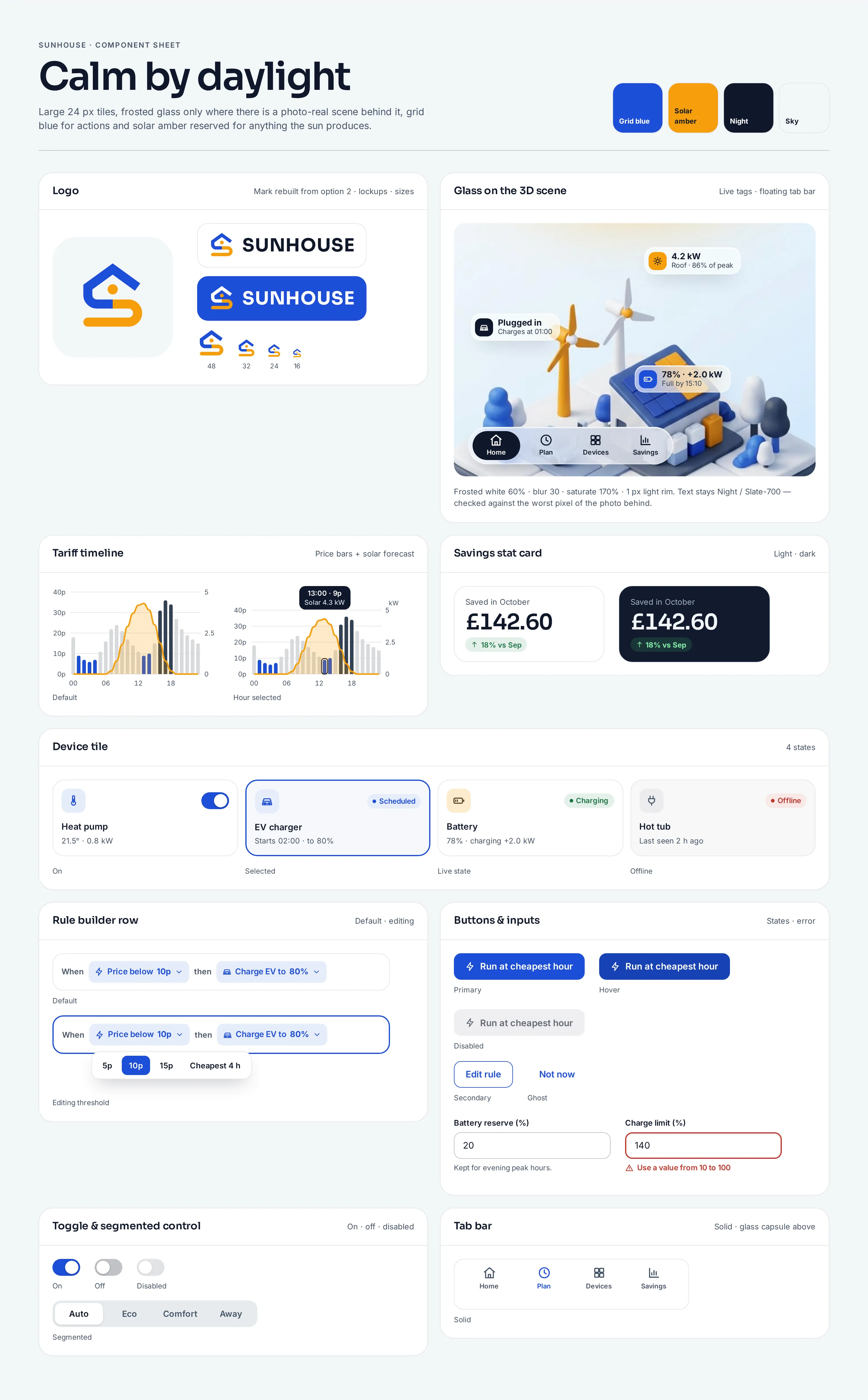
Component sheet
Logo, glass over the 3D scene, tariff timeline, device tile in four states, savings stat light and dark, rule builder (default / editing), buttons and inputs with error, toggles, segmented control and the tab bar.
OptimisticClearDaylight
Questions & answers
Is Sunhouse a real product?
No. Sunhouse is a self-initiated concept by Omnisense — a brief we set ourselves, with no client and no business metrics. All tariffs, kWh and savings in the screens are sample data.
Who is Sunhouse for?
Homeowners aged 30–60 with some mix of solar panels, a home battery, a heat pump and an electric car, who pay a tariff that changes by the hour.
What does the day planner do?
It puts the price per hour and the solar forecast on one chart and makes one suggestion at a time about when to run the car, the dishwasher or the heat pump.
Which devices does it cover?
Solar, battery, heat pump and EV charger, shown as one system rather than a list of devices. The electric car is a first-class device, with its charging scheduled in the cheapest hours.
What did you design?
A mobile app in light and dark: live energy flow over a 3D house, a day planner with price and solar forecast, heat-pump detail with an offline-sensor state, and a dark monthly savings report — plus the component sheet, logo, palette and type.